
Imbalance Assessment

Pelvic Balance Self-Check

A simple way to understand where your body feels uneven

Many people notice:

  • One hip feels tighter than the other
  • One leg feels stronger or more stable
  • Standing or walking doesn’t feel even

This often comes from a pelvic imbalance — not damage, not injury — just the way the body has adapted over time.

The good news is:
You can gently check this yourself at home, and then use your Back Blueprint techniques to help bring things back into balance.

Below is both a video walk through of the process and text below for those that prefer to read … all outlined in simple easy steps!

How This Self-Assessment Works

This is not a medical test and nothing is forced.

You will:

  1. Gently move or stretch one muscle at a time
  2. Notice how each side feels
  3. Look for differences — tighter, easier, or harder

You’re simply asking your body:

“Does one side move differently from the other?”

That information tells you where to focus your Back Blueprint work.

Take Your Time

  • Move slowly
  • Stop before pain
  • Comfort is more important than range

Small differences are enough to notice — you don’t need to stretch far.

The Self-Assessment Steps

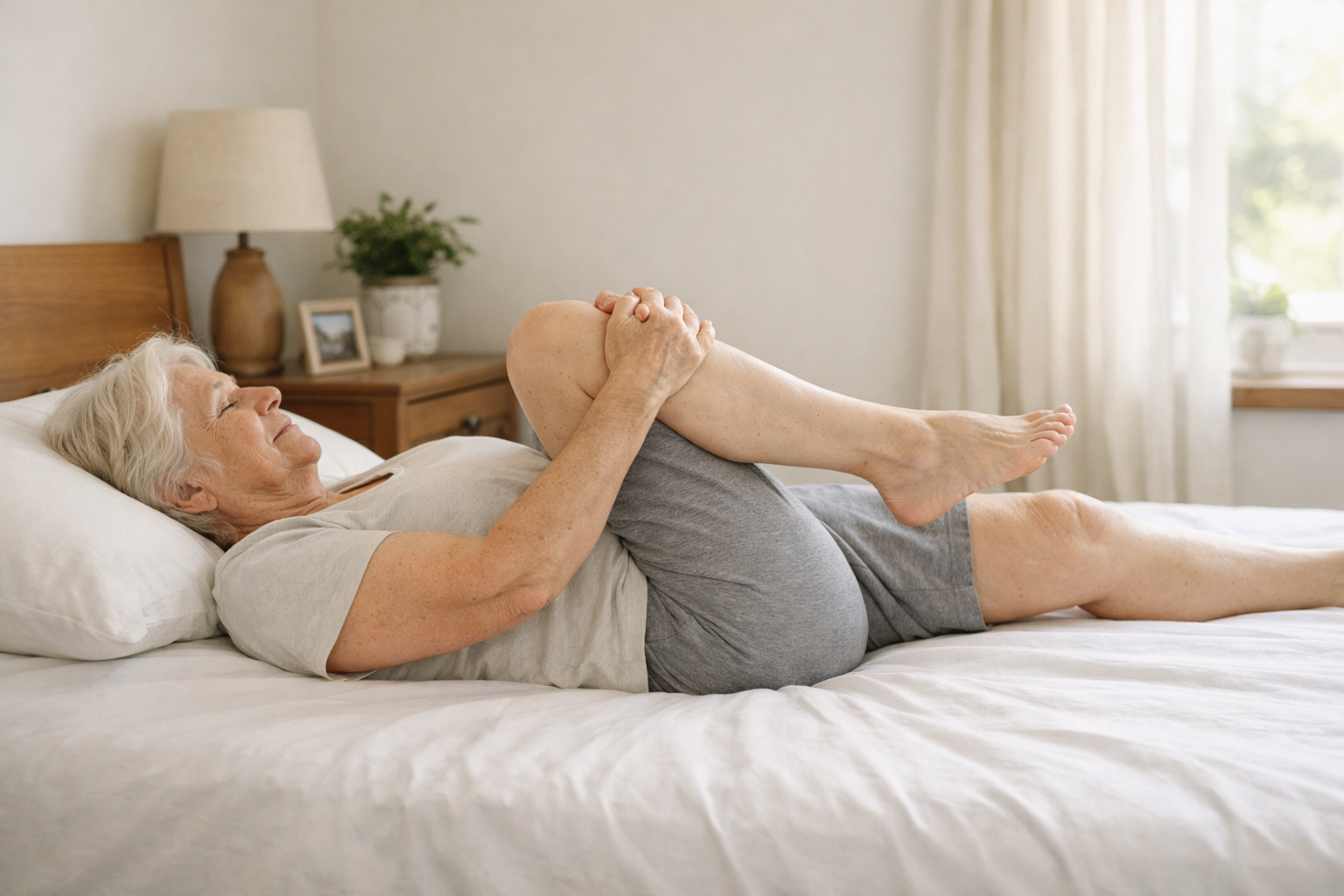
1. Hip Flexor (Front of the Hip)

Why this matters
This muscle affects how much the pelvis tips forward.
How to check
* Lie on your back on a bed
* Gently bring one knee toward your chest
* Let the other leg relax
Notice
* If the relaxed thigh lifts or won’t drop easily → hip flexor tightness on that side
What it tells you
* A tighter side often means that side of the pelvis is pulling forward
* If the left knee to chest causes right thigh to rise up or not relax, then you have a RIGHT Forward Pelvis
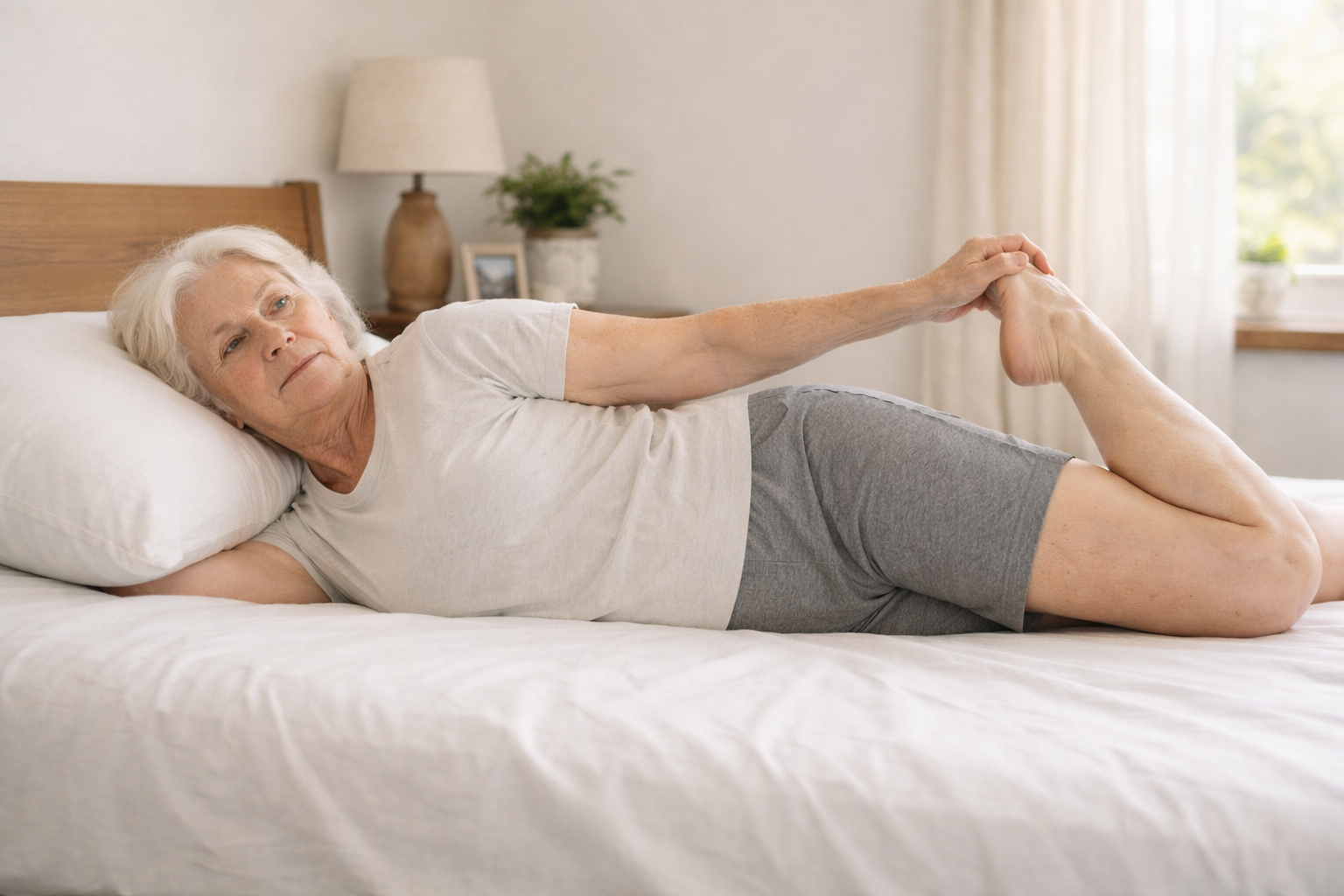
2. Front of the Thigh

Why this matters
This muscle links the thigh to the pelvis.
How to check
* Lie on your side or tummy
* Gently bend one knee
Notice
* One side feels tighter or harder to bend
What it tells you
* Tightness here often goes with a forward-tipping pelvis on that side
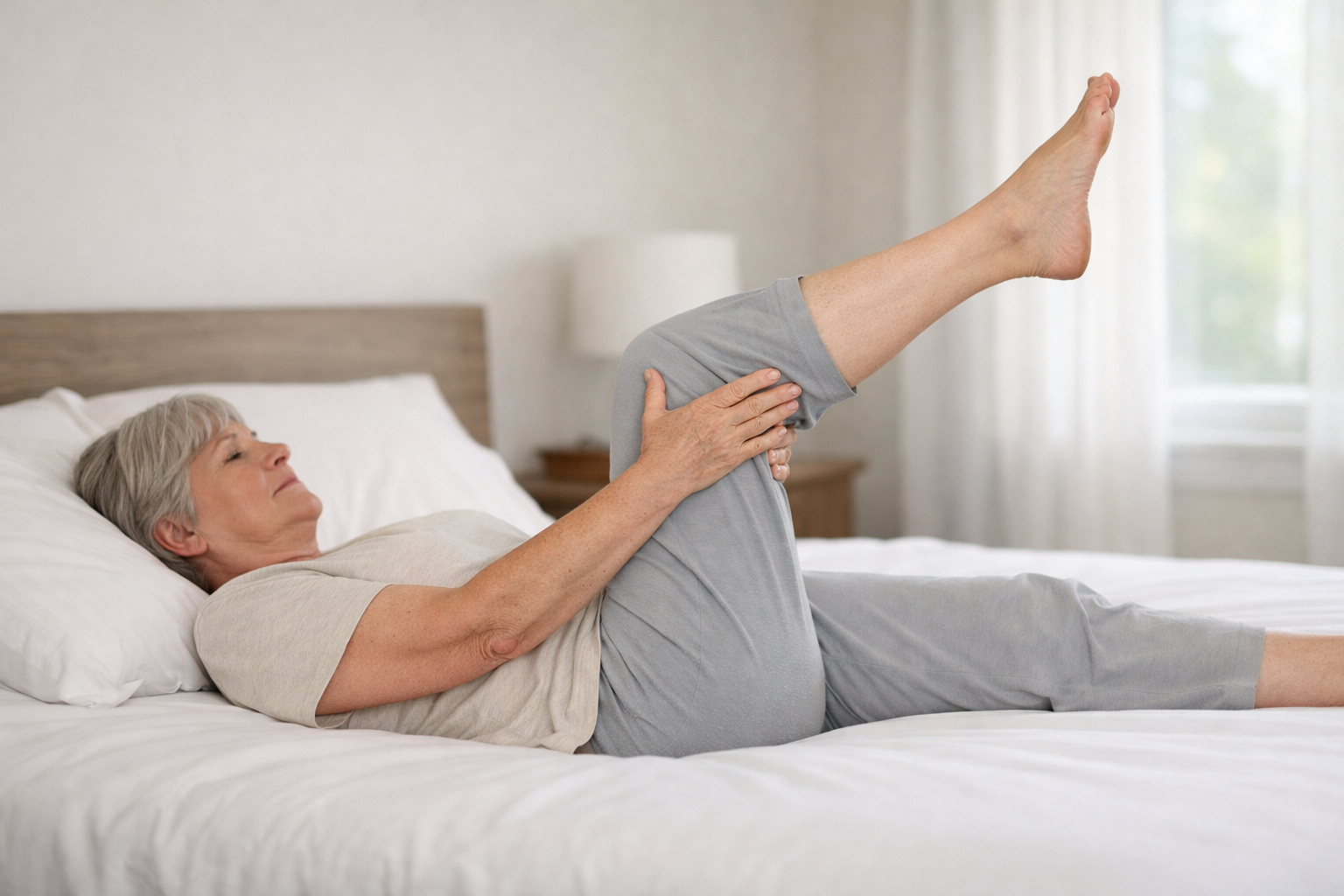
3. Back of the Thigh (Hamstrings)

Why this matters
These muscles affect how the pelvis tips backward.
How to check
* Lie on your back
* Slowly lift one straight leg
Notice
* One side stops earlier or feels tighter
What it tells you
* A tighter side may be pulling the pelvis slightly backward
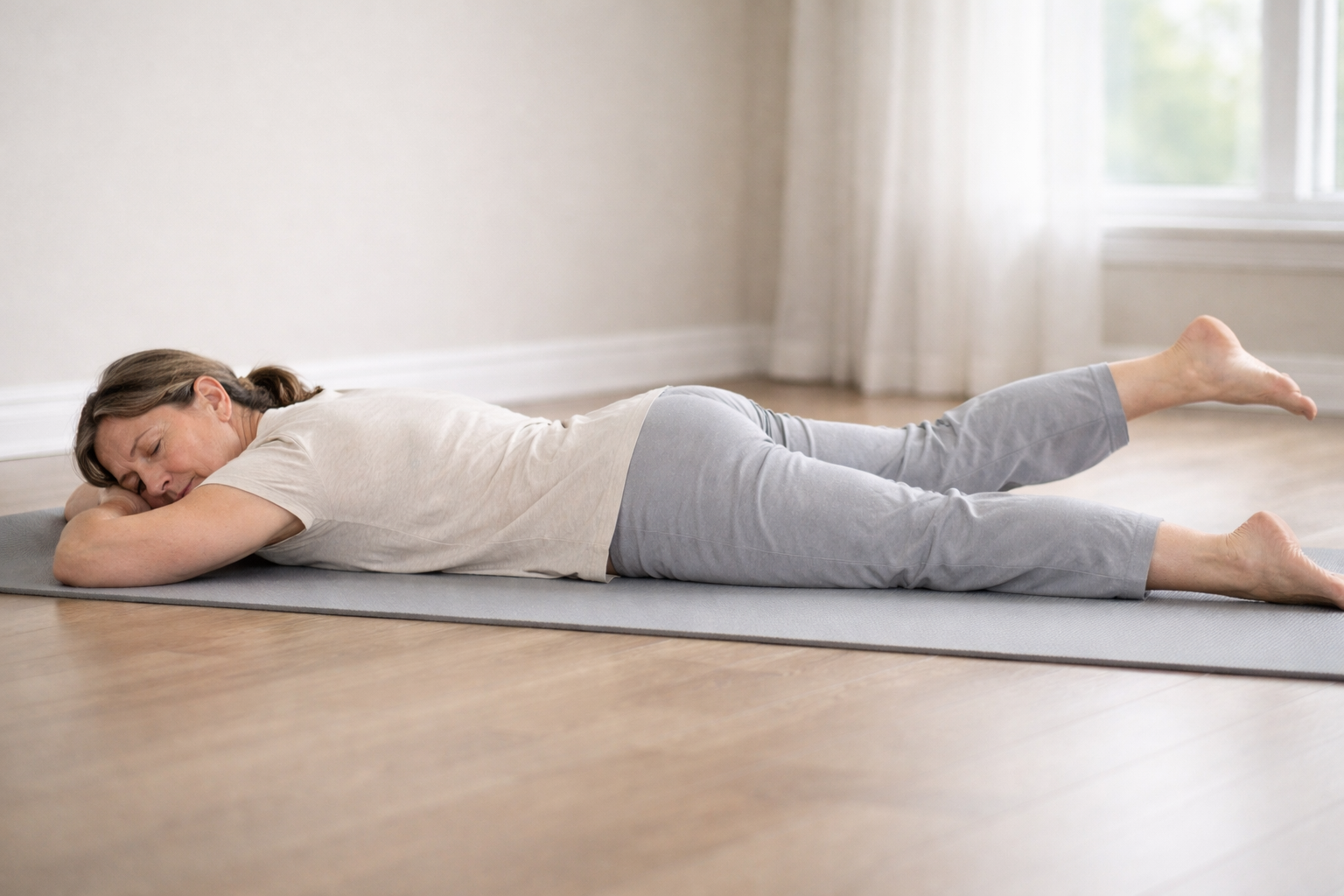
4. Buttock Muscle (Gluteus Maximus)

Why this matters
This muscle helps keep the pelvis steady when you walk and stand.
How to check
* Lie on your tummy
* Tighten your tummy gently
* Lift one leg just a little
Notice
* One leg feels harder to lift
* Or the lower back wants to arch
What it tells you
* That side may not be supporting the pelvis as well
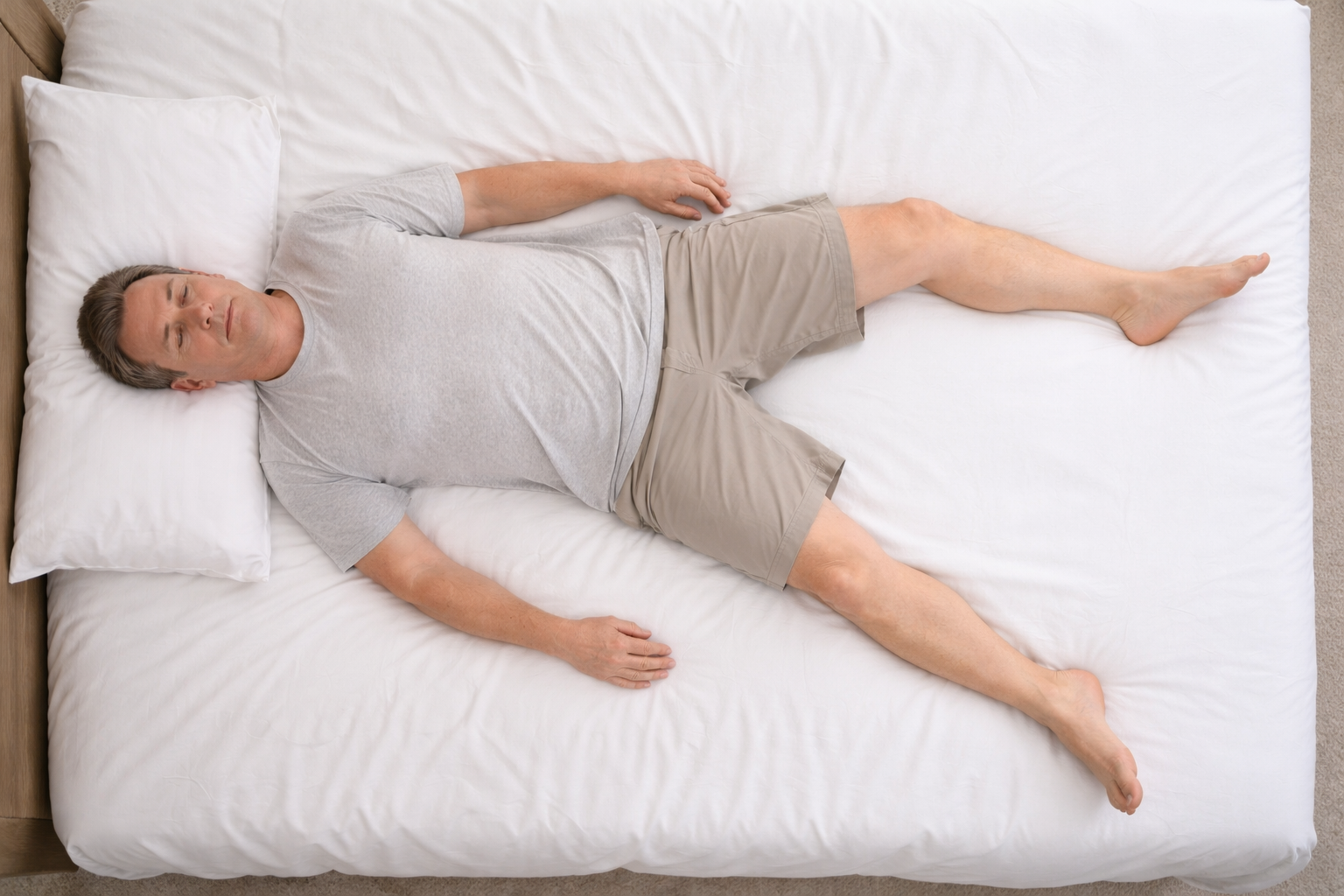
5. Inner Thigh (Adductors)

Why this matters
These muscles help balance the pelvis side-to-side.
How to check
* Lie on your back
* Slowly let one leg move out to the side
Notice
* One side feels tighter
What it tells you
* Tightness can pull the pelvis sideways
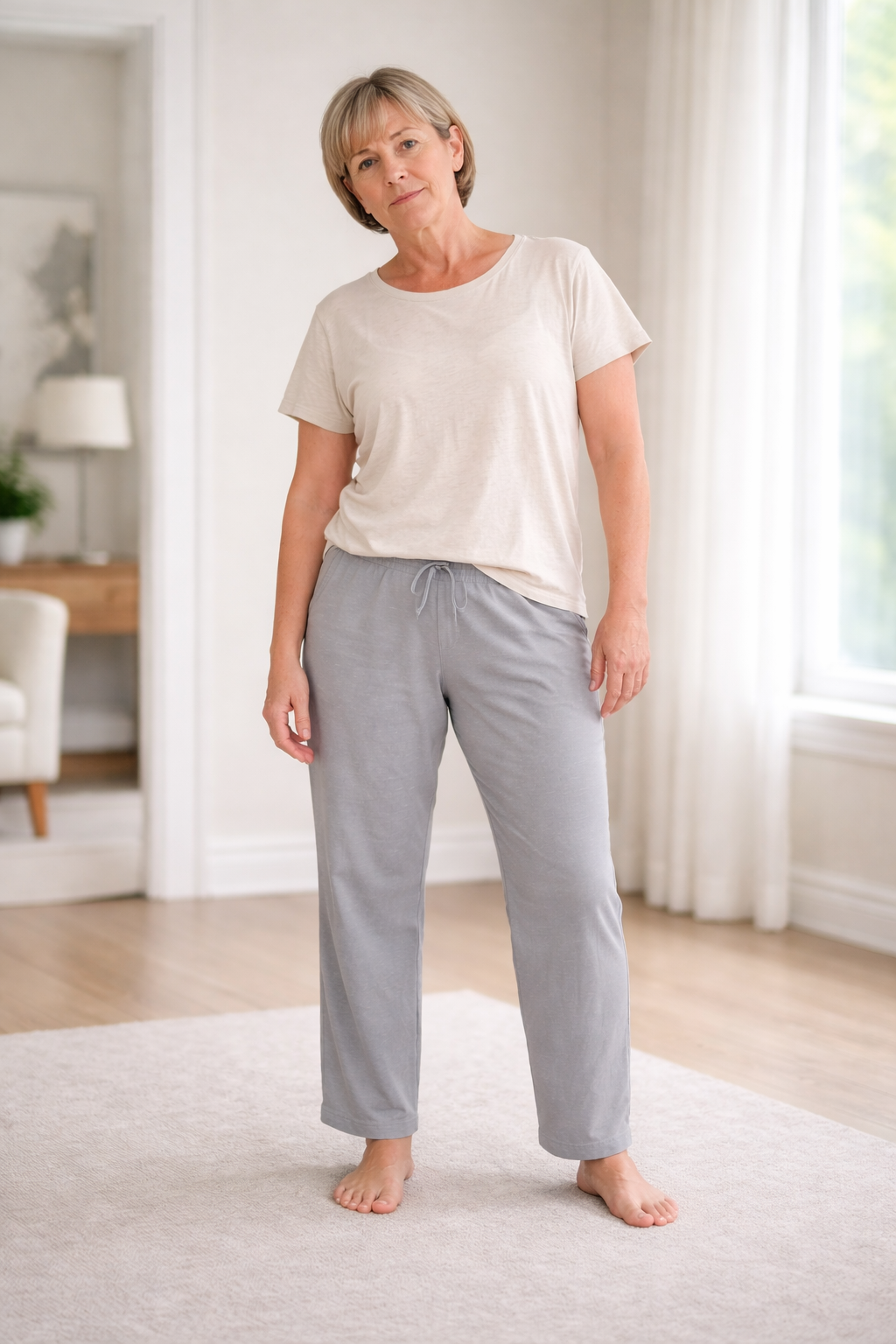
6. Side of the Lower Back (Quadratus lumb)

Why this matters
This muscle can lift one side of the pelvis higher.
How to check
* Stand comfortably
* Slowly lift one hip toward your ribs
Notice
* One side feels shorter or tighter
What it tells you
* The pelvis may be sitting higher on that side

What to Do With What You Find

You don’t need to label or diagnose anything.

Simply ask:

  • Which side feels tighter?
  • Which side feels weaker or harder?

Then:
👉 Use your Back Blueprint techniques
👉 Focus on the tighter or less supported side
👉 Keep everything gentle

Many people notice:

  • More even standing
  • Easier walking
  • Less tension

Sometimes straight away, sometimes gradually.

A Gentle Reminder

Your body isn’t wrong.
It has adapted over years of life, work, stress, and movement.

This self-assessment simply helps you:

  • Listen more clearly
  • Work more specifically
  • Support your body with confidence

Left & Right Rotated Pelvic Imbalance

Self-Assessment Guide

Use this table after completing the muscle checks.
You are looking for patterns, not perfection.


Left Rotated Pelvic Imbalance

(Pelvis rotated forward on the LEFT, back on the RIGHT)

What You NoticeWhat It Suggests
Left hip flexor feels tighter or leg won’t relax fullyLeft side of pelvis pulling forward
Left front thigh tighter than rightReinforces forward pull on left pelvis
Right hamstring feels tighter than leftRight side of pelvis pulled backward
Left buttock (glute) harder to activateReduced support on left side
Left inner thigh feels tighterPelvis drifting or rotating left
Right side of lower back feels tighterBody compensating for left rotation

Overall pattern:
The pelvis tends to rotate toward the left, creating uneven loading through the hips and lower back.


Right Rotated Pelvic Imbalance

(Pelvis rotated forward on the RIGHT, back on the LEFT)

What You NoticeWhat It Suggests
Right hip flexor feels tighter or leg won’t relax fullyRight side of pelvis pulling forward
Right front thigh tighter than leftReinforces forward pull on right pelvis
Left hamstring feels tighter than rightLeft side of pelvis pulled backward
Right buttock (glute) harder to activateReduced support on right side
Right inner thigh feels tighterPelvis drifting or rotating right
Left side of lower back feels tighterBody compensating for right rotation

Overall pattern:
The pelvis tends to rotate toward the right, affecting balance and ease of movement.


Important Notes 

  • Most people show a mix, not a perfect pattern

  • Small differences are enough to guide correction

  • This is information, not a diagnosis

👉 Use what you notice to guide your Back Blueprint daily correction, focusing gently on the tighter or less supported side.

Scroll to Top