
Foundation - The Pelvic Balance Routine
Pelvic Balance Self-Correction
Intro: How Your Spine and Pelvis Move
Your body is designed to move even when you’re lying still. Every breath causes tiny shifts in your joints, helping your spine, pelvis, and skull stay balanced.
The sacrum (base of the spine) and occiput (back of the skull) move together in a gentle rocking motion. This natural rhythm helps your spine release tension and settle into better alignment.
The Pelvic Balance Correction uses rolled towels under the pelvis and gentle support of the skull to tap into this motion. Lying with support and moving your feet slowly helps your spine self-correct safely.
When combined with reflexes, muscle balancing, and Jin Shin Jyutsu, this practice encourages your body to re-balance naturally at home.
Step-by-Step Pelvic Balance Correction
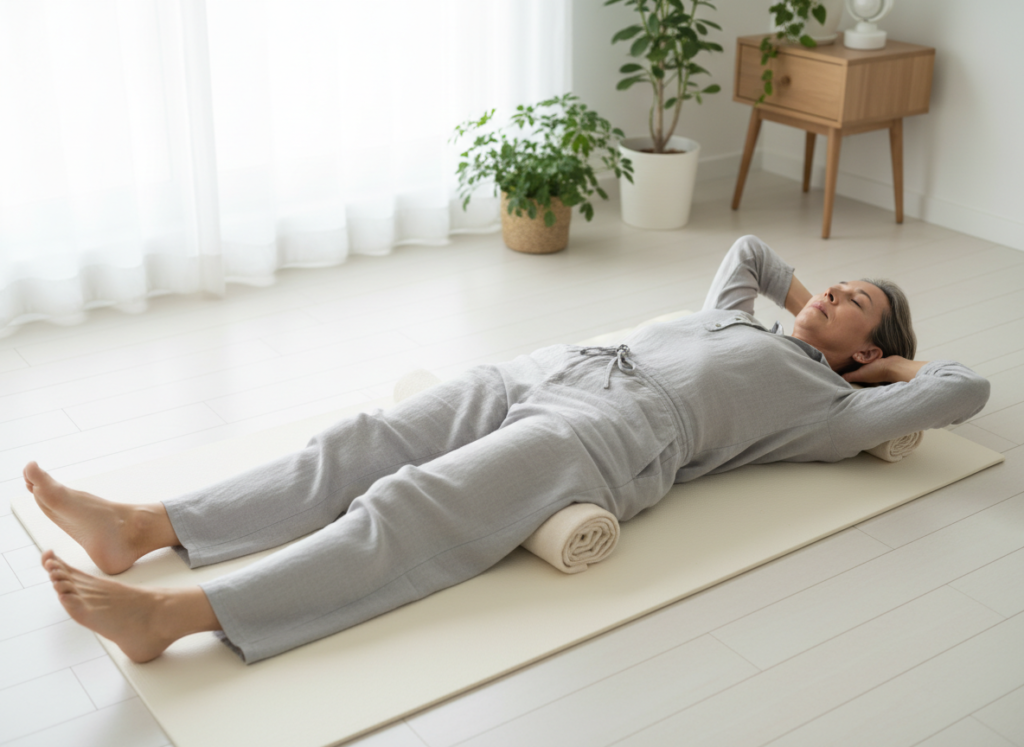
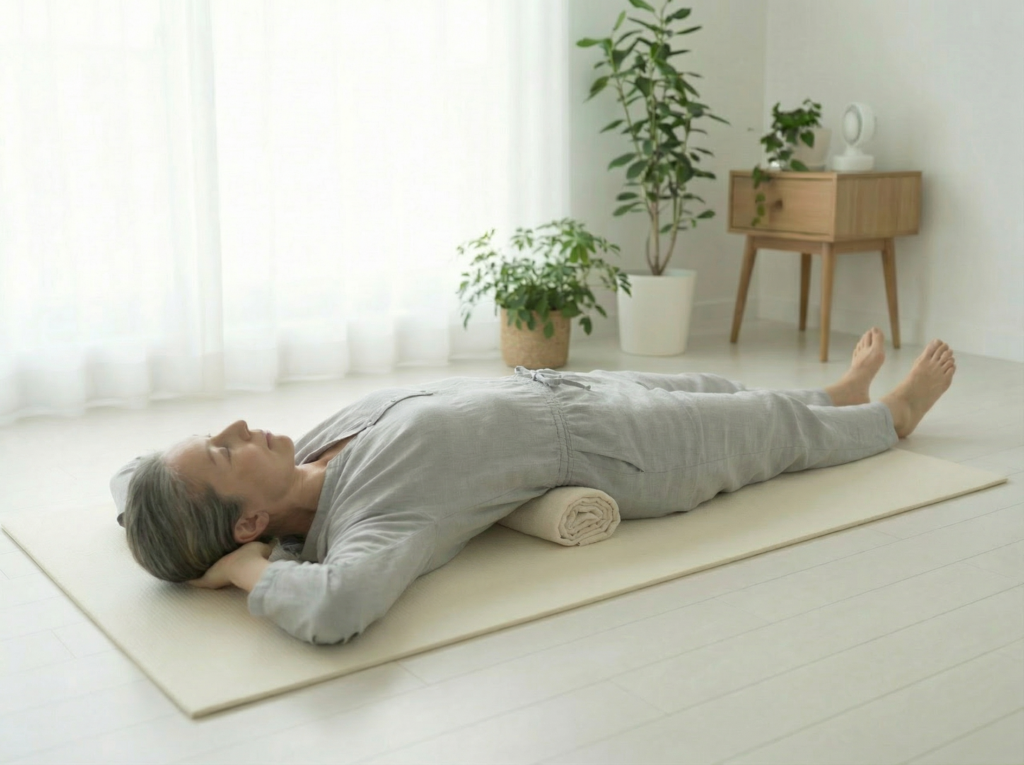
You’ll need:
- 2 rolled towels
- Flat bed or mat
- Your own fists for gentle skull support
Step 1 – Position the Towels
- Place one rolled towel under your sit bones on one side.
- Place the other rolled towel under the opposite top of your pelvis, creating a subtle tilt.
Step 2 – Support Your Skull
- Place your fists gently behind the back of the skull, elbows relaxed.
- Let your head rest lightly without forcing the neck.
Step 3 – Relax & Let Your Spine Move
- Lie fully on your back and breathe calmly.
- The support under your pelvis and your fists at the skull creates a gentle vibrational change along the spine, encouraging it to “unravel” tension naturally.
Step 4 – ‘Walk In’ the Correction
- Move your feet slowly back and forth, as if walking along the bed.
- This helps your pelvis settle evenly and integrates the correction.
Step 5 – Stay Calm & Breathe
- Remain in this position for a few minutes, focusing on slow, calm breaths.
- Allow your body to respond naturally — no force is needed.
Pelvic Balance Correction – Forward Pelvic Imbalance
| Pelvic Pattern | Common Muscle Pattern You’ll Notice | Towel Placement for Correction | What This Supports |
|---|---|---|---|
| Left Forward Pelvis | • Left hip flexors often feel short or tight • Left hamstrings feel lengthened or weaker • Right hamstrings often feel tighter • Right glute may feel underactive • Possible tightness through the right low back / QL | • Place one rolled towel under the LEFT sit bone • Place second rolled towel under the RIGHT top of the pelvis (front / iliac crest area) • Fists gently behind the back of the skull | Encourages the left side to ease back, reduces hip flexor dominance, and allows the pelvis and spine to rebalance through natural breathing and spinal rhythm |
| Right Forward Pelvis | • Right hip flexors often feel short or tight • Right hamstrings feel lengthened or weaker • Left hamstrings often feel tighter • Left glute may feel underactive • Possible tightness through the left low back / QL | • Place one rolled towel under the RIGHT sit bone • Place second rolled towel under the LEFT top of the pelvis (front / iliac crest area) • Fists gently behind the back of the skull | Encourages the right side to ease back, reduces hip flexor dominance, and supports pelvic symmetry and spinal ease |
Daily Practice Tips
- Do this once daily, ideally alongside your reflexes, muscle balancing exercises, and Jin Shin Jyutsu holds.
- You cannot do it wrong — gentle, regular practice is far more effective than forceful stretching.
- Small, consistent inputs over time help your pelvis and spine find balance, ease, and mobility.