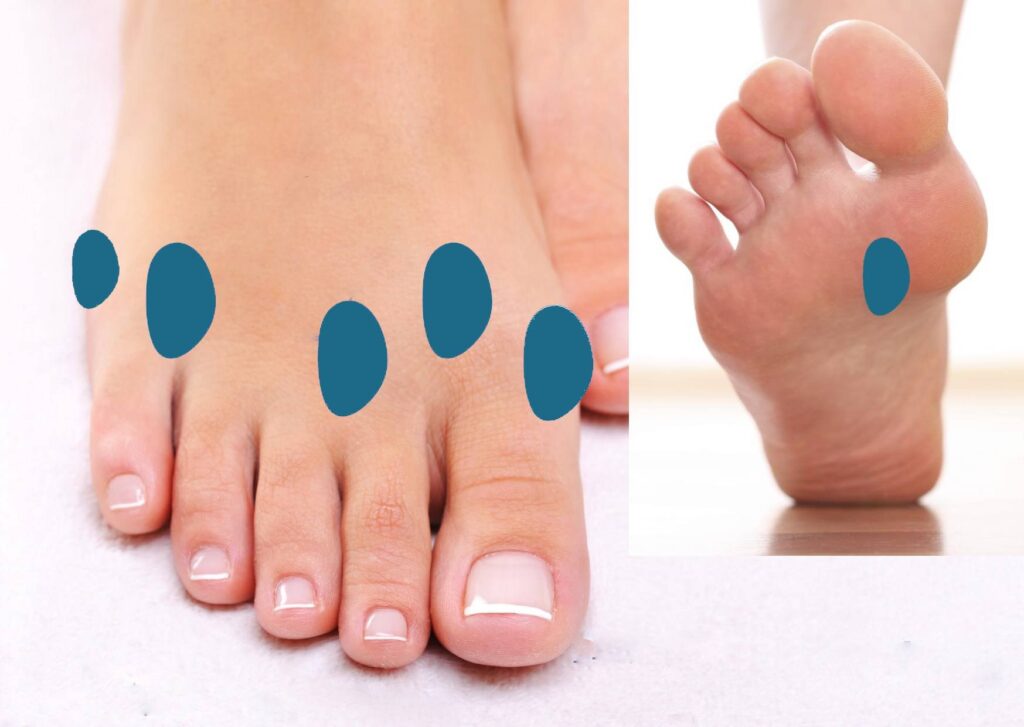
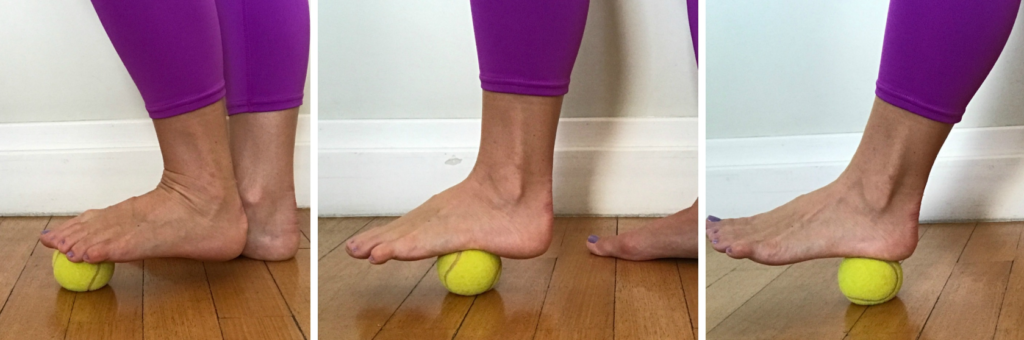
Tennis balls are very handy for any back pain issue. What you need to do is roll the tennis ball on the sole of your foot.
Initially it may be quite sore and if so then a good indication that your feet are not good.
Start with a small amount of pressure, enough where you can feel it but it isn’t too sore. Roll the ball right around your entire foot, including the instep, heel and even toe area.
Do this for a few minutes at least and then repeat on the other foot.
You may notice one foot being more tender than the other. As time goes by and the discomfort is less you increase the pressure until you can literally stand on the tennis ball and feel little or no discomfort.
This helps to re-establish the connection of your feet to your brain, namely improve your proprioception.
Correcting the foot-brain connection is easy to assess and just as easy to treat.
First, simply stand on one foot with the other foot raised off the ground. See how long you. Can stand like this with your eyes open. If you find this difficult then using the tennis ball technique above and the Gait reflexes which follow are essential to do.
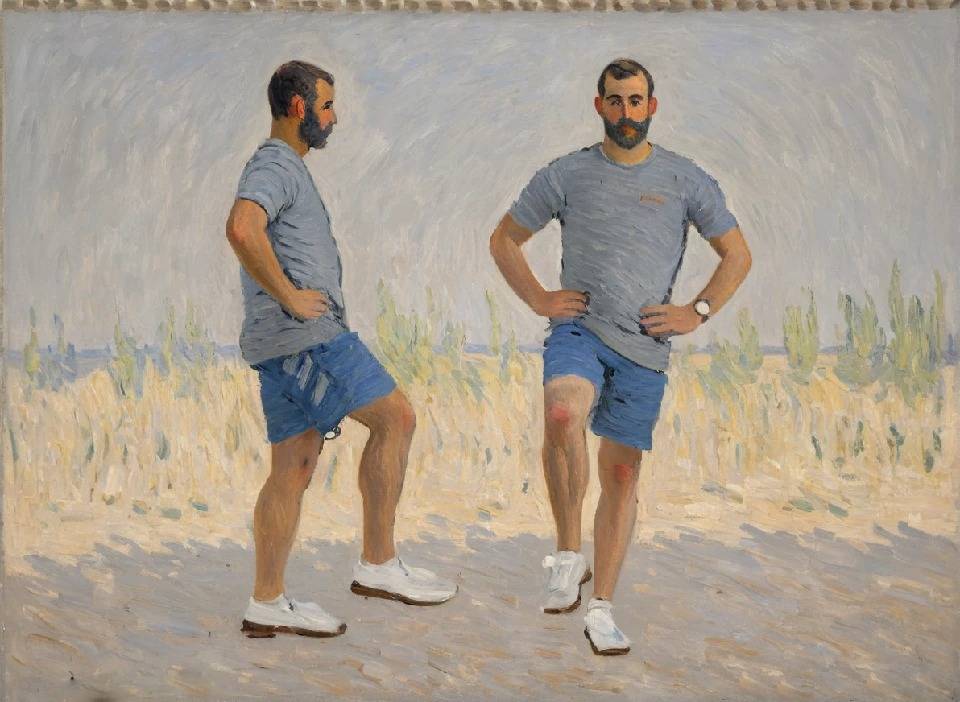
If you find you can stand comfortably with one foot raised for 30 seconds to a minute, then all you need to do now is stand on one foot, close your eyes. Raise the other foot to your knee and stand there with your arms out stretched.
If you have a good foot-brain connection you will notice two things:
1. You can stand in this position for 30 seconds to a minute without excessive movement or wobbling.
2. You can stand on each foot for the same amount of time.
If you notice that you cannot stand for long before you start to wobble and eventually you fall or have to open your eyes, then you have a problem.
If you noticed you can stand on one foot for a minute but the other you cannot, you have a problem.
To correct the imbalance you need to stimulate some acupressure points first which helps the brain reintegrate the proprioception. The main point is called KI27 which is a very important acupressure point.
The point is just below the collar bone where it meets your sternum (breast plate) in the depression of flesh.
It may be tender to rub and if so you now it needs to be stimulated.
You correct Foot-Brain balance by doing the following:
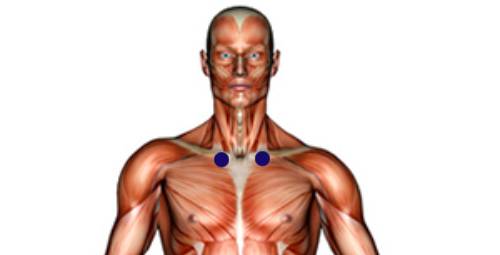 1. Close your eyes, rub the K27 points firmly, which are in the corner of your collar bone and sternum – they may be tender also.
2. Tap the top of your head and then your chest while you breathe in and out twice.
3. Then stand on one foot as long as you can. until you fall or open your eyes. If you find this too difficult start with your EYES OPEN and progress to eyes closed as you improve.
4. Repeat the rubbing of the K27 points and again stand for as long as you can.
5. Repeat once again.
You should notice that each time you can stand a little longer and are steadier. If not then you have very slow reflexes in your feet, you may need to mobilise your feet.
Mobilise Your Feet
To mobilise your feet, you can do this yourself or with a partner. If by yourself just grasp your foot with one hand which becomes your anchor, and then with the other hand contact your foot adjacent to your hand.
Twist one hand in one direction and the other hand in the opposite direction. Move around your foot doing this over the entire foot as much as possible.
Then do the same with the ankle joint, where you mobilise the joint by moving it forward and back and twisting in one direction then the other.
This may be best using a partner as this can be difficult to do by your self. You can’t do this wrong, you are basically self massaging your feet and getting movement back into the joints. So be firm but just don’t be too aggressive.
Skipping this part if it is uncomfortable on your back won’t be an issue either, as when the Foot-Brain balance kicks in, also the tennis balls will help mobilise joints too, the joints will usually move better.
Gait reflexes relate to how you move. When you walk, your left arm moves forward at the same time as your right leg.
When you injure a foot for example you can limp, you change your gait (how you walk) and are able to protect the area.
With your spine, you can’t limp … you don’t have a spare spine to use.
So your body creates imbalances, and as part of this your gait reflexes alter. If they don’t reset as the injury heals they can cause ongoing imbalances.
These are very minor and most times don’t cause pain … immediately.
But they allow your body to move inefficiently which means with time it will tire … and imbalances reform.
To correct these reflexes all you do is rub the points in the picture. Rub firmly and each point relates to a different reflex.
You will know if these are active as the points will be quite tender.
Simply rub the tender points for about 7 seconds and make sure you check both feet.
Rub these each day and you should notice within a few days the tenderness eases which means the reflex has reset.
Please note: rub firmly but not enough to cause bruising. You will see differences by using the same pressure and seeing the difference in pain on each point.