
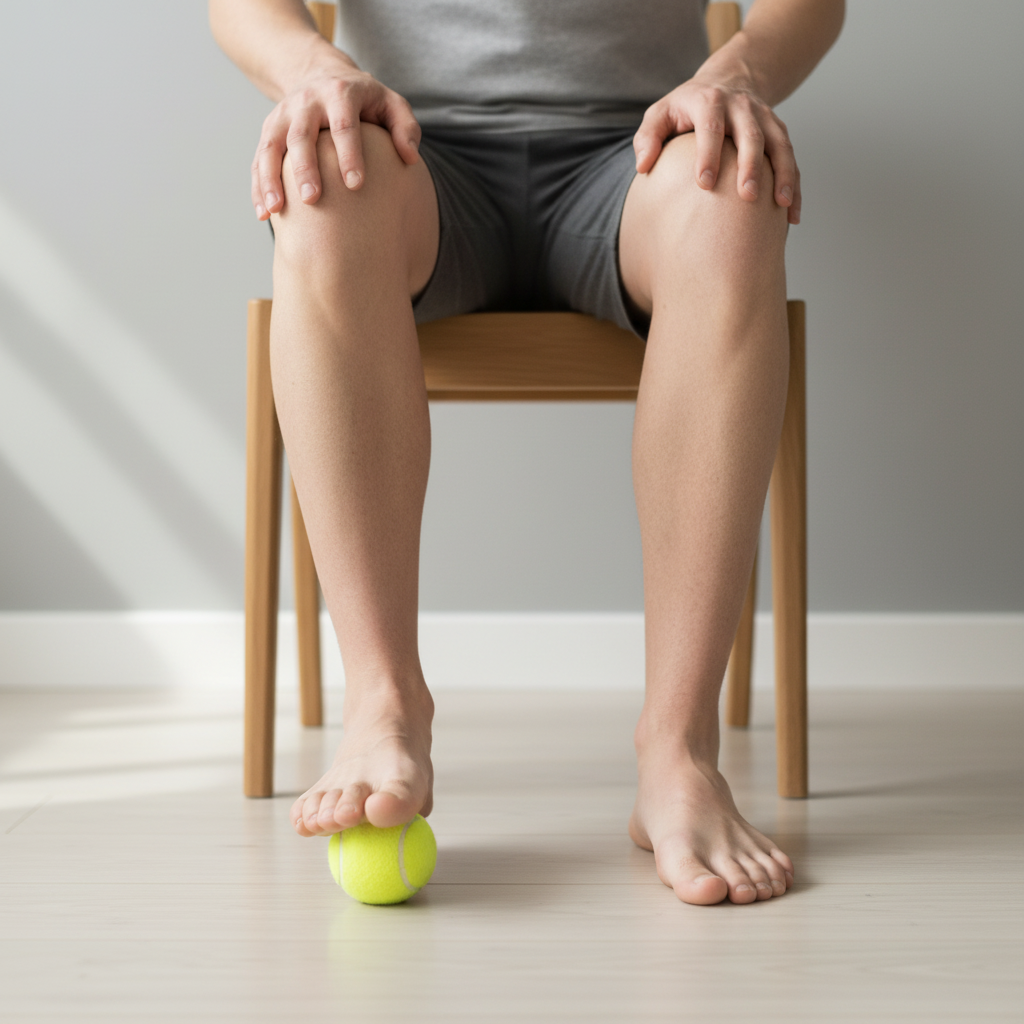
1. Roll a Tennis Ball Under the Foot
Why it helps: Your feet act as natural shock absorbers. Tight or underactive muscles here can create tension up through the knees, hips, and spine.
How to do it:
Place a tennis ball under the arch of one foot.
Gently roll it from heel to toes, pausing on tender spots.
Spend 1–2 minutes per foot, breathing deeply.
Perform daily, especially before walking or standing for long periods.
Tip: Focus on slow, controlled pressure rather than speed. The goal is to awaken the muscles that stabilise and absorb impact.
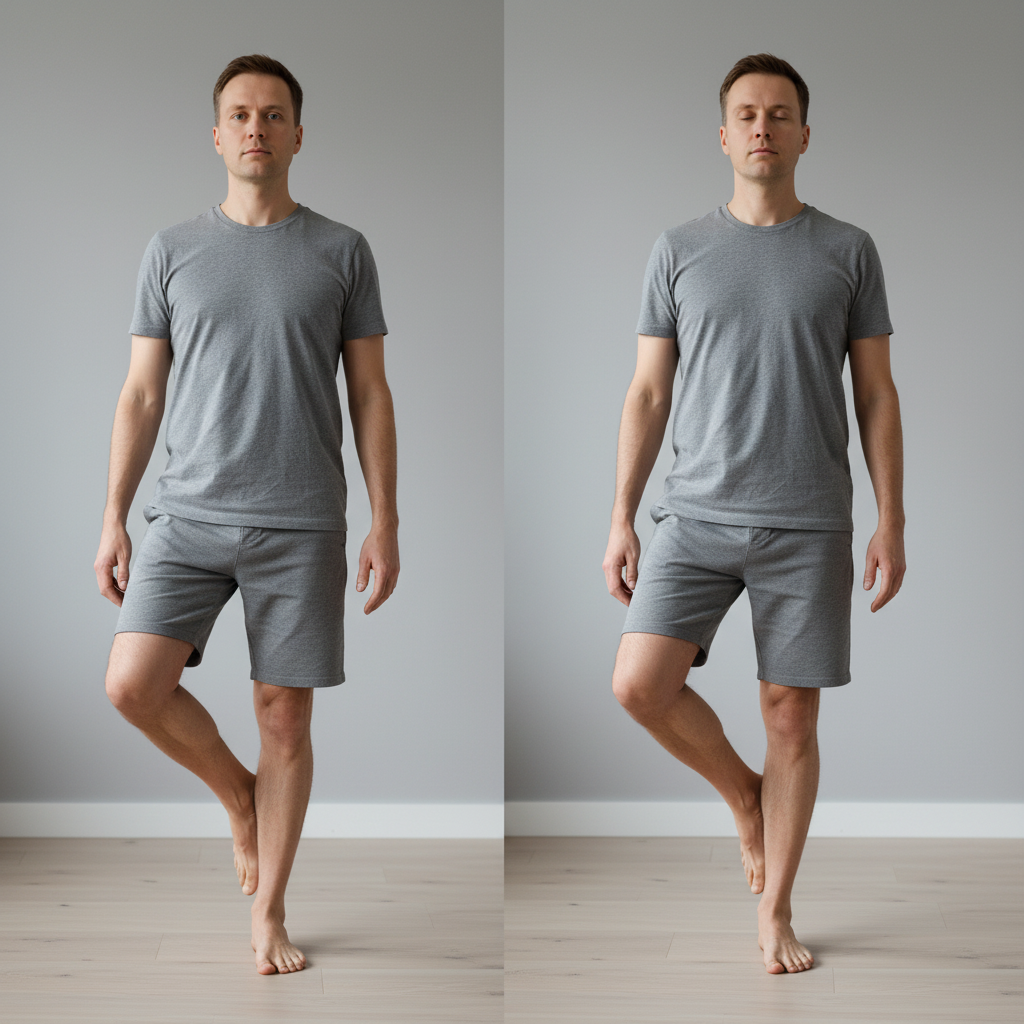
2. Standing on One Foot: Eyes Open, Then Closed
Why it helps: Balancing on one foot activates your nervous system’s feedback loops. This improves coordination, ankle, hip, and core stability—all essential for spine health.
How to do it:
1. Stand near a wall or chair for safety.
2. Lift one foot slightly off the ground, keeping the standing leg soft but strong.
3. Hold for 20–30 seconds, eyes open.
4. Close your eyes and hold for another 10–20 seconds.
5. Repeat 2–3 times per side.
Tip: If your balance is shaky, lightly touch a surface for support. Over time, this trains your body to react better to movement and reduces stress on the spine.
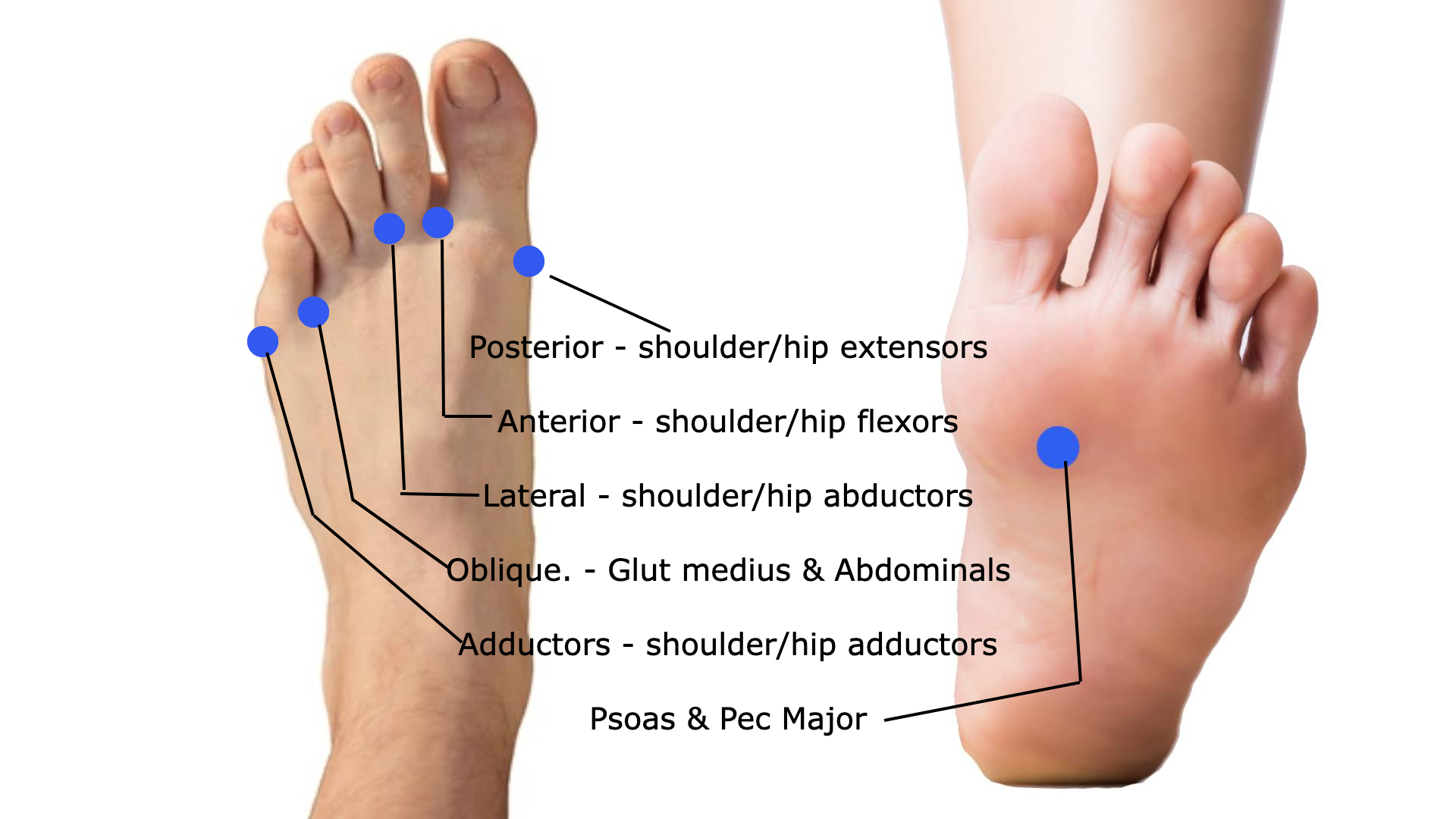
3. Rub Acupressure Gait Reflexes
Why it helps: These reflex points coordinate the muscles and nervous system involved in walking, running, and general movement. Stimulating them improves rhythm, stability, and posture.
How to do it:
Use your fingertips to gently massage along the reflex areas of your feet and lower legs as pictured.
Focus on small circular motions for 1–2 minutes per side.
Breathe slowly and notice subtle tension releases.
Tip: Light to moderate pressure is enough. You should feel gentle stimulation, not pain.
Some points may be tender, but with rubbing the tenderness should ease. Once none are tender - this indicated the reflexes are balanced.
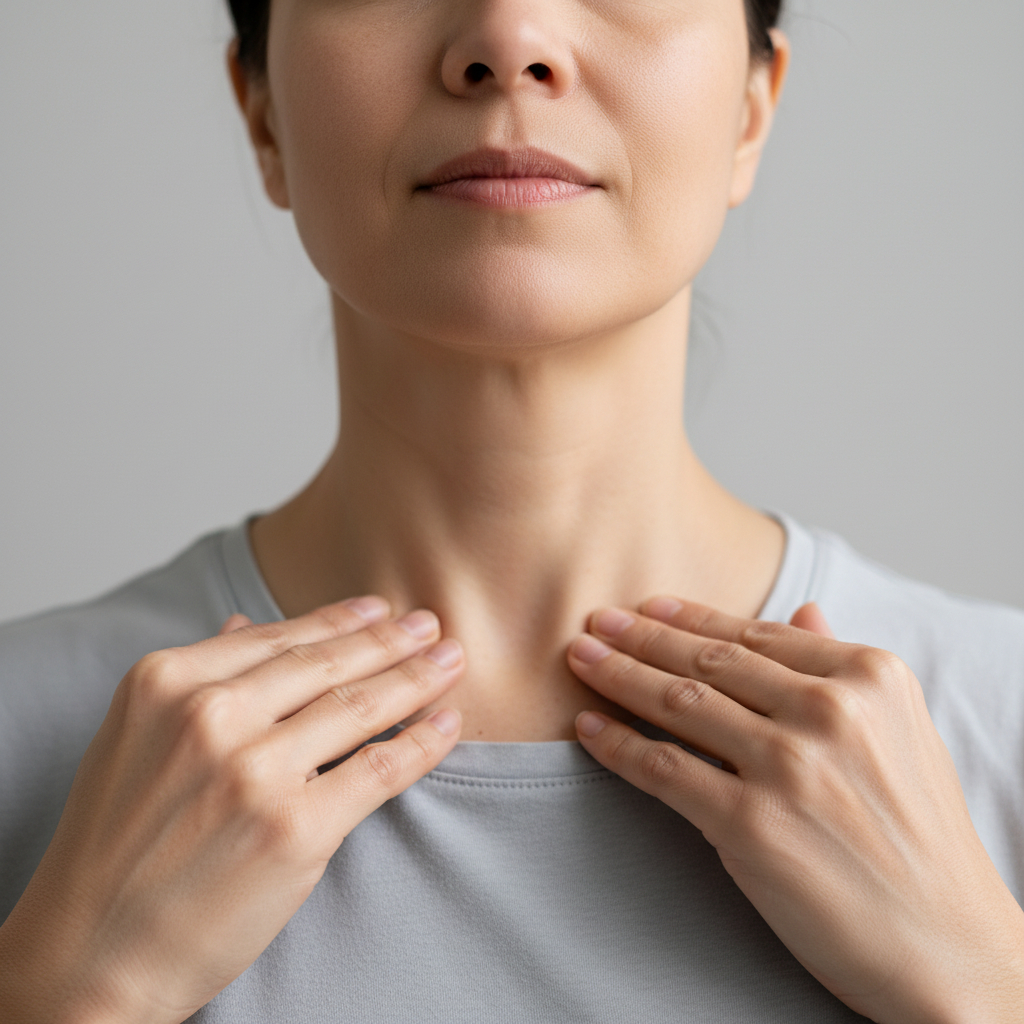
4. Rub KI27 (Collarbone Area)
Why it helps: KI27, located just below the collarbone, links to core strength, breathing patterns, and upper-body stability. Stimulating this point helps coordinate movement and reduces upper spine tension.
How to do it:
1. Locate KI27 just below your collarbone, near the sternum.
2. Use your fingertips to rub gently in small circles for 30–60 seconds per side.
3. Focus on breathing deeply to allow muscles to release.
Tip: Combine with slow shoulder rolls to further relax the upper body.
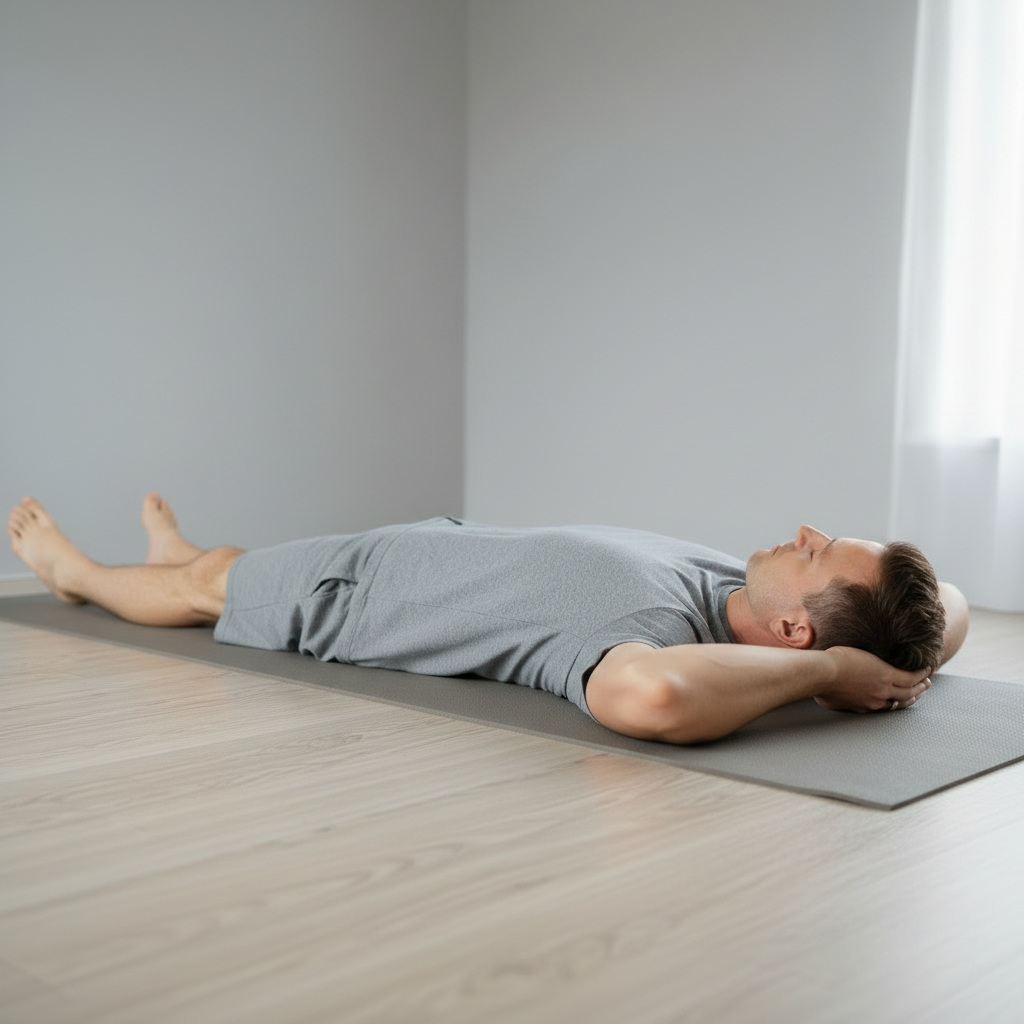
5. Rolled Towel Under the Sacrum with Fists Behind the Skull
Why it helps:
The sacrum and skull move together in a subtle rocking motion.
Supporting this sacro-occipital rock improves joint alignment throughout the spine, enhancing mobility and reducing tension.
How to do it:
1. Roll a small towel and place it under your sacrum while lying on your back.
2. Place your fists gently behind the back of your skull.
3. Allow your spine to settle and rock slightly with each breath.
4. Stay for 2–3 minutes, breathing slowly in and out.
Tip: This is a gentle, passive technique—allow your body to do the movement, don’t force it.