
Hamstrings (back of the thighs)
Why they matter: Tight hamstrings can pull on the pelvis, increasing strain through the lower back.
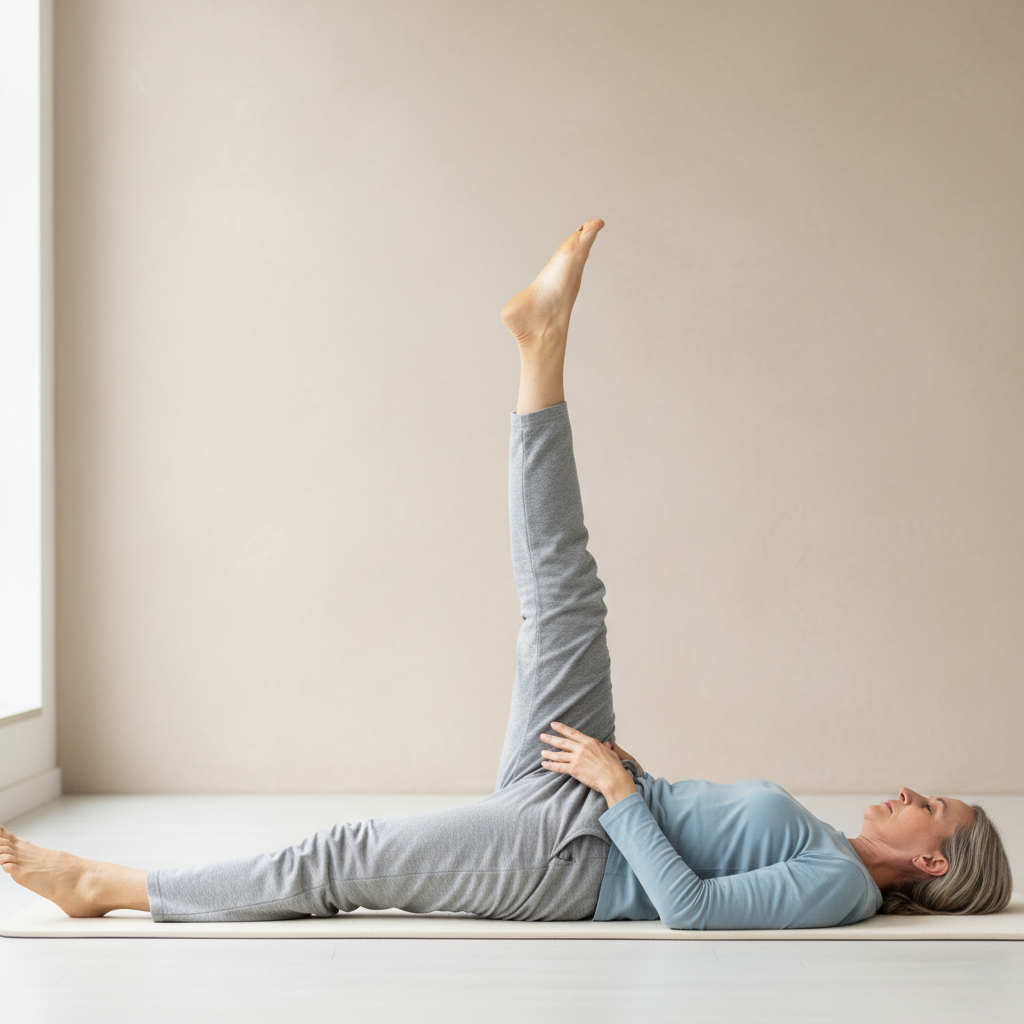
PNF Stretch (gentle, supine): Lying on your back, one leg lifts comfortably toward the ceiling.
Hands gently support behind the mid-thigh (not the knee) or use a strap.
Press the leg lightly into your hands for a few seconds, then relax and allow it to move a little further into comfort.
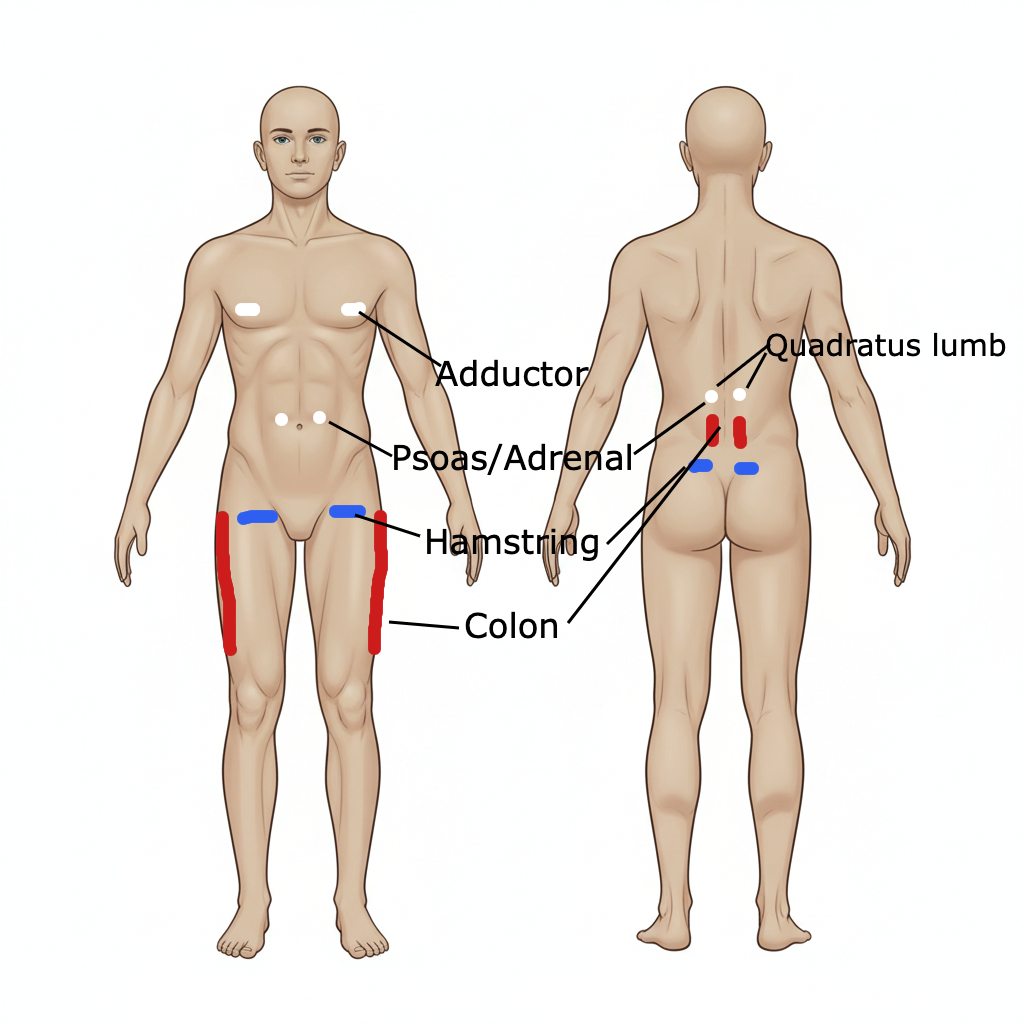
Neurolymphatic Reflex Points:
Lower abdomen, just above the pubic bone, slightly to each side of midline.
Gentle rubbing or circular pressure helps support nerve input to the hamstrings.
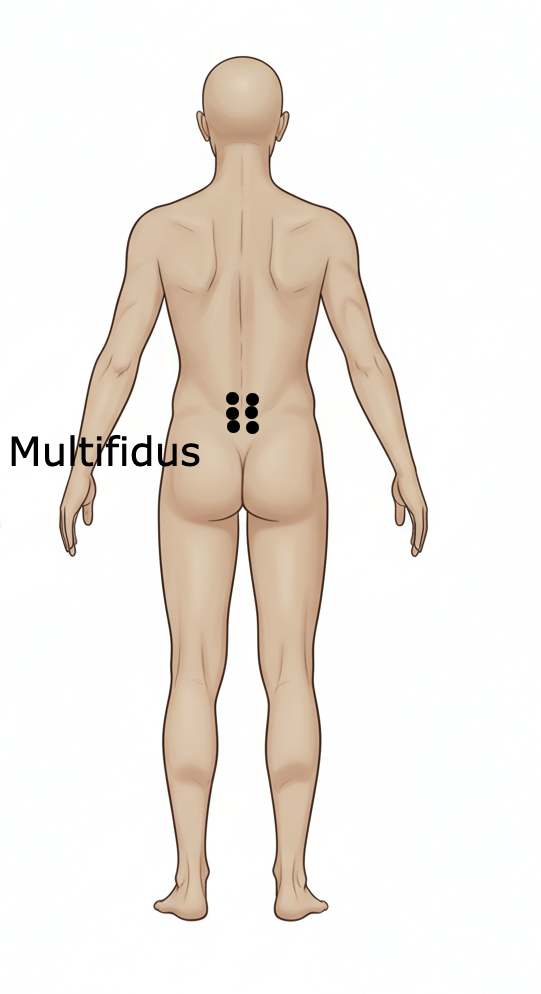
The other reflex is over the lower back at the base and outward to the SI joint area
Psoas (deep hip flexor)
Why it matters: The Psoas connects the spine to the legs and is highly sensitive to stress. When tight, it can contribute to back pain and a feeling of instability.
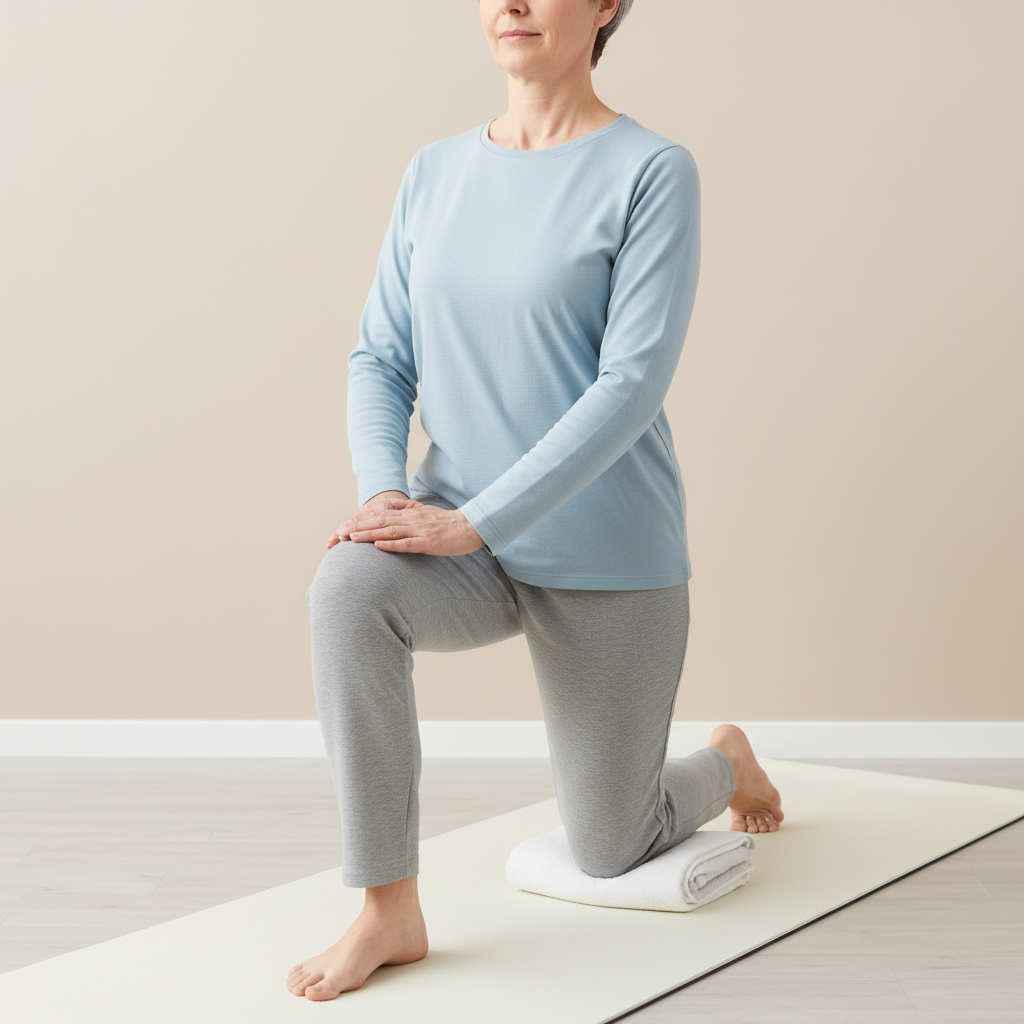
PNF Stretch (kneeling lunge):
Kneel on one knee with a folded towel or cushion under the knee for comfort.
Step the opposite leg forward into a gentle lunge and lean slightly forward to stretch the front of the hip.
Lightly engage the hip muscles for a few seconds, then relax and allow the hip to soften.
Keep the torso upright and shoulders relaxed; do not over-arch the lower back.
Neurolymphatic Reflex Points:
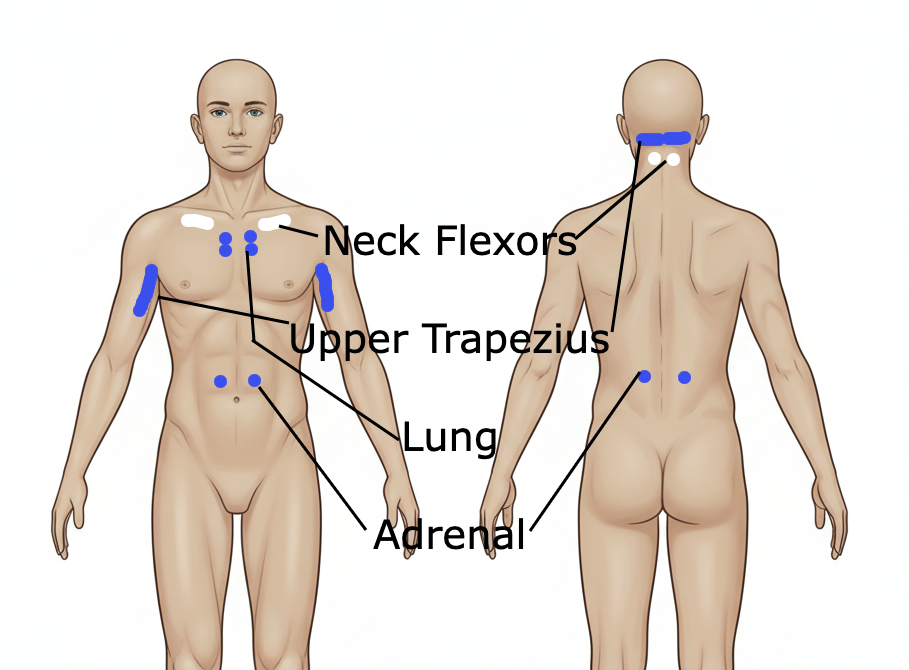
Abdomen, a few finger widths to either side of the belly button and slightly upward by a couple of finger widths.
Gentle circular pressure helps calm and balance the Psoas response.
The reflexes on the back are a mirror of these - they also cover the Adrenal Glands and Quadratus lumb muscle.
Adductors (inner thighs)
Why they matter: These muscles help stabilise the pelvis. When imbalanced, they can affect both the hips and lower back.
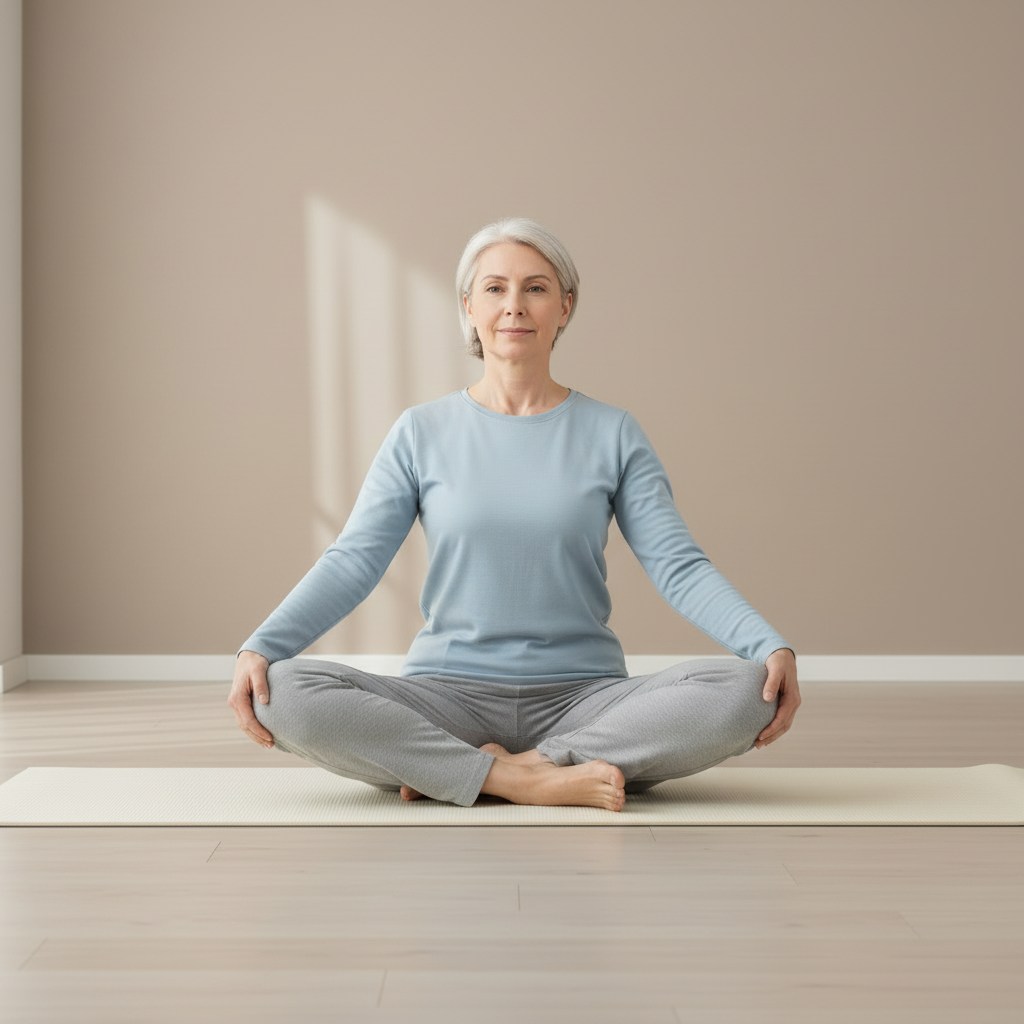
PNF Stretch (supine knee press):
Lying on your back with knees bent, gently press the knees together.
Relax and allow them to fall apart slightly into comfort.
Neurolymphatic Reflex Points:
Adductor muscles help stabilise the pelvis during walking and standing. When they’re not working well, the lower back often compensates.
Location
Found behind the areola of the chest
⚠️ Important note for women:
This area can be sensitive.
Use very light pressure
Avoid the point if there is pain, inflammation, or breast tenderness
This reflex should never feel sharp or uncomfortable
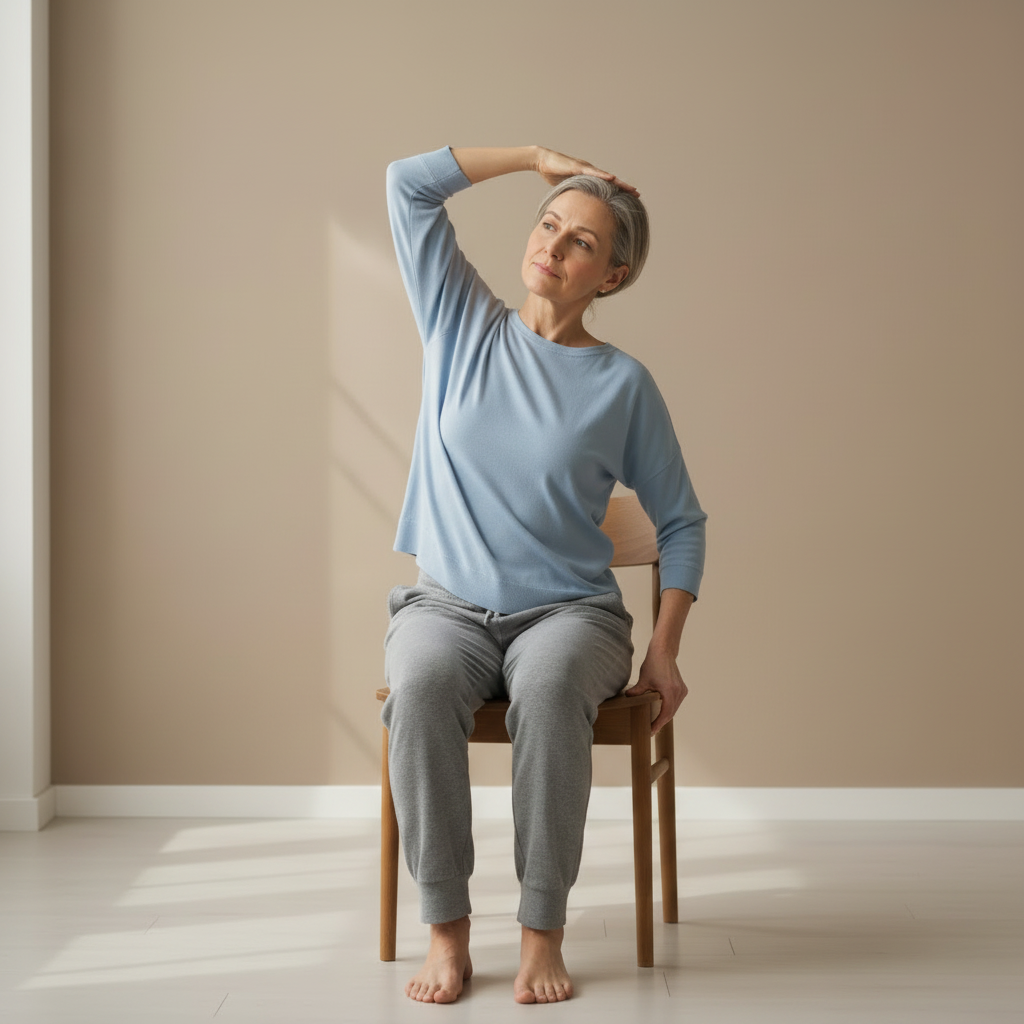
Quadratus Lumborum (Side-Bending Chair Stretch)
Why it matters: The Quadratus lumborum helps control side bending and pelvic stability. Overactivity can cause one-sided back pain.
PNF Stretch (Side-Bending Chair Stretch, Self or Partner):
Sit on a chair and reach the hand of the side to be stretched up and over your head, bending toward the opposite side.
Grab the chair for stability or have a partner provide resistance.
Use the opposite hand against the chair to resist you bending back, attempting to straighten the rib cage.
Contract: Attempt to bring your rib cage down toward your hip against that resistance (contracting the QL) for 6 seconds.
Relax/Stretch: Relax and stretch further into the side bend for 20–30 seconds.
Neurolymphatic Reflex Points:
These are on the back only, the same spot as the Psoas muscle.
Gentle pressure helps reset muscle tone and support nerve flow.
Upper Trapezius (top of shoulders)
Why it matters: This muscle commonly holds stress and contributes to neck stiffness and headaches.
PNF Stretch (gentle):
Sit or stand comfortably.
Gently tilt the head to one side, lightly pressing into your hand for a few seconds.
Relax and allow the neck to soften further.
Neurolymphatic Reflex Points:
Upper chest, just below the collarbones toward the shoulder.
Gentle rubbing supports muscle relaxation and nerve input.
Neck Flexors (front of neck)
Why they matter: Weak or inhibited neck flexors can lead to overuse of back-of-neck muscles and poor posture.
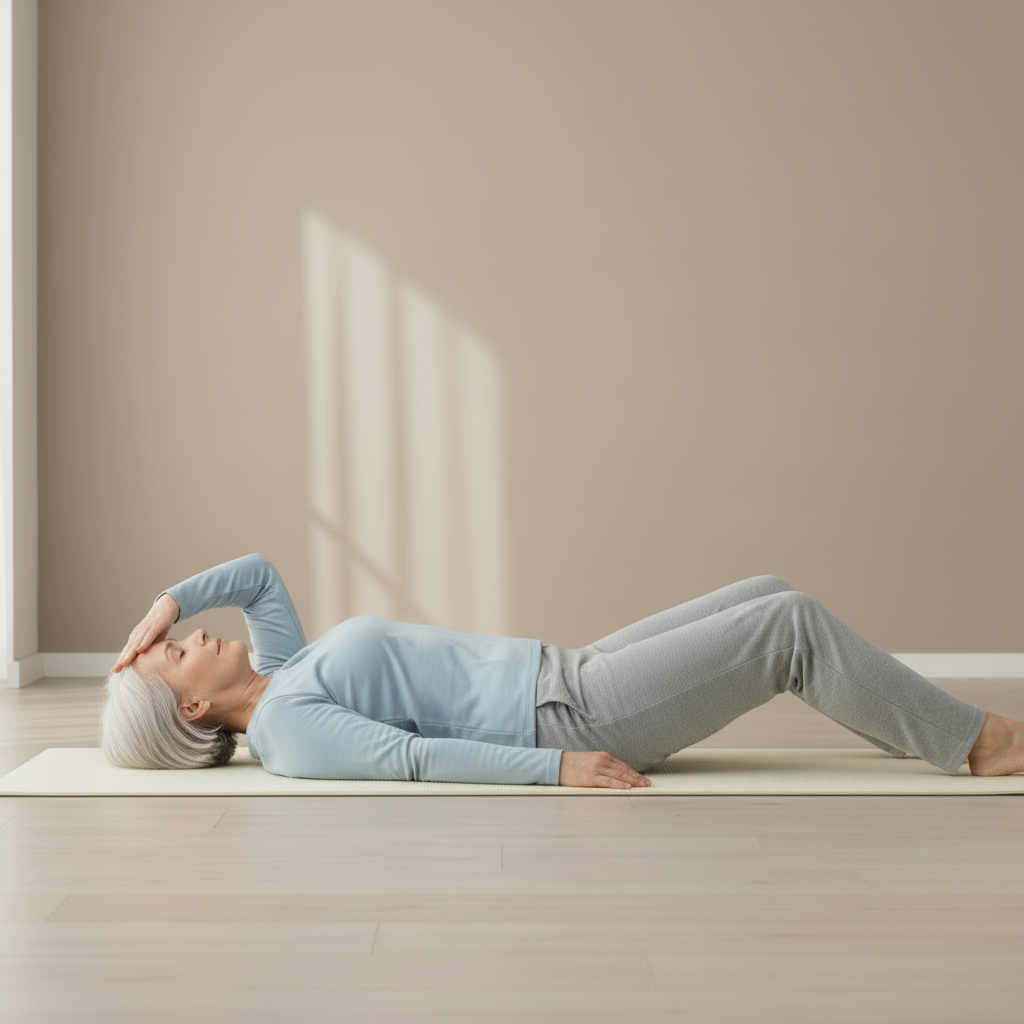
PNF Stretch (gentle activation):
Lying on your back, gently nod the chin as if saying “yes”.
Lightly resist for a few seconds, then relax.
Neurolymphatic Reflex Points:
Front of chest, close to the breastbone.
Gentle stimulation supports balanced neck control.
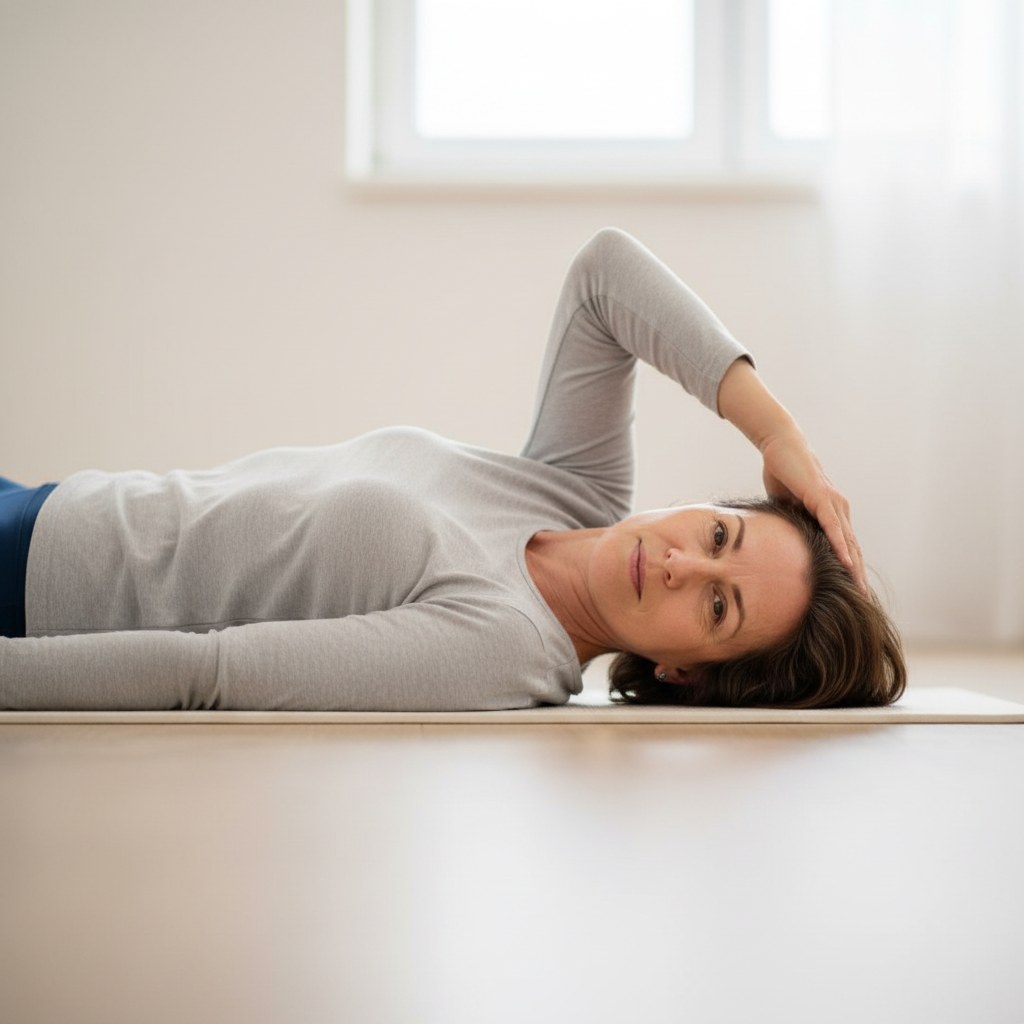
Neck Rotation (turning left and right)
Why it matters: Restricted rotation is common with neck tension and can affect daily movement and awareness.
With this exercise no need to use PNF reflexes, the stretch is sufficient as the muscles used for this movement are covered by the other two reflexes
PNF Stretch (gentle):
Slowly turn the head to one side.
Lightly resist for a few seconds, then relax and allow a little more comfortable rotation.